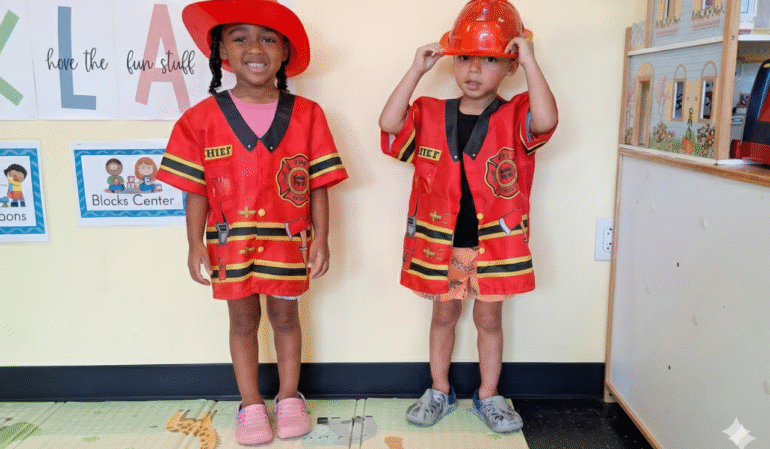
Walk into any preschool classroom during “Community Helpers” week, and you’re bound to see a parade of pint-sized firefighters, doctors wielding plastic stethoscopes, and construction workers building towers of blocks.
It is undeniably adorable. But while it looks like simple dress-up, there is some serious cognitive and emotional work happening beneath those plastic hard hats.
This theme isn’t just about identifying uniforms; it is a child’s first real lesson in social studies and civics. Here is why we dedicate time to this crucial theme and why it matters for your child’s development.
1. Teaching Community Helpers Reduces Anxiety
For a young child, the world can be big, loud, and unpredictable. Figures of authority or emergency response—like police officers in uniform or doctors with needles—can be a source of genuine anxiety.
According to resources like PBS Kids for Parents, role-playing helps children process feelings and conquer fears. When we explore these roles through play, we humanize them:
The Doctor: Becomes a person who helps our bodies heal, rather than just someone who gives shots.
The Police Officer: Becomes a distinct figure we can run toward when we are lost or scared, rather than someone to fear.
The Firefighter: Becomes a brave friend who puts out fires, making the loud sirens seem less frightening and more helpful.
2. Connecting the Dots of Their World
Young children are naturally egocentric—they see the world primarily as it relates to them. Teaching community helpers encourages them to look outward.
This theme helps them realize that the mail doesn’t just magically appear in the box; a mail carrier works hard to bring it. The trash doesn’t just vanish; sanitation workers take it away. The roads aren’t just there; construction workers built them.
This builds a sense of interconnectedness. It teaches children that our community relies on many different people doing many different jobs to function happily and safely.
3. Inspiring Empathy and Respect
This curriculum is a fantastic opportunity to model respect for all kinds of labor. We don’t just focus on the “hero” professions; we talk about librarians, grocery store clerks, veterinarians, and bus drivers.
By valuing these roles, we teach children that:
Everyone has a contribution to make.
Helping others is a virtue.
We should say “thank you” to the people who make our days easier.
The Bottom Line on Teaching Community Helpers
When your child comes home wearing a paper police badge or pretending to check your temperature, they are doing more than playing. They are trying on the roles of adulthood, learning that the world is a safe place full of people who want to help.
To learn more about our philosophy on play-based learning, visit our About Us page.
Let’s keep the conversation going at home!
Ask your child who their favorite helper is tonight! You might be surprised by who they choose—and why.