

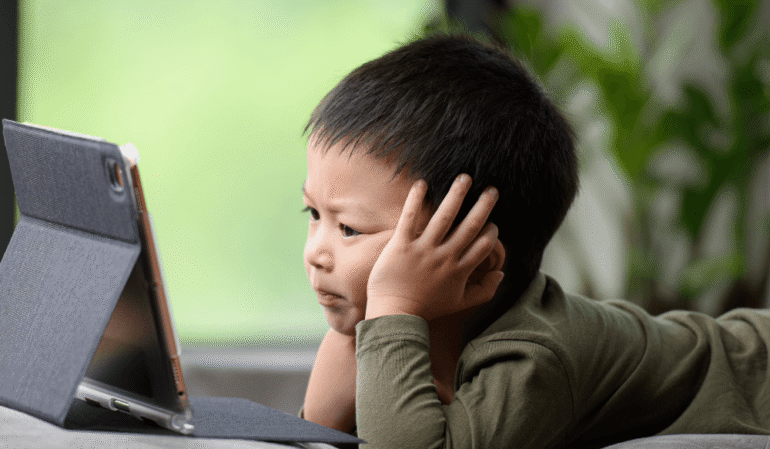
Why Screen Time Feels Complicated
Screen time guidelines for preschoolers can feel confusing for parents. It’s late afternoon, you’re exhausted, and your preschooler is bouncing off the walls. You hand them the tablet “just for a bit” so you can make dinner—or maybe just breathe. Five minutes turns into thirty, and suddenly you’re wondering: Did I just ruin their brain?
Let’s get real: screens are part of modern family life. Tablets, TV, and phones surround kids from birth. Pretending you can eliminate all screens isn’t realistic. Instead, focus on finding a healthy balance that supports learning and keeps family life manageable.
What the Experts Say
According to the American Academy of Pediatrics (AAP), kids ages 2–5 should have no more than one hour of high-quality screen time each day. However, not all screen time is equal. There’s a big difference between zoning out to endless cartoons and watching an educational show together.
When parents co-view and talk about what’s happening, kids learn new words and understand content better.
The Benefits of Screen Time (Yes, There Are Some)
Used wisely, screens can actually help your child grow.
Educational apps and shows can reinforce math, reading, and problem-solving skills.
Watching together improves comprehension and language development.
Video calls with grandparents help kids feel connected, even from afar.
In short, quality content and shared experiences turn screen time into a positive tool for learning and connection.
 The Risks of Too Much Screen Time
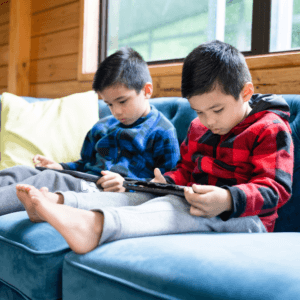 The Risks of Too Much Screen Time
On the other hand, too much screen use can interfere with healthy development.
Kids may get less time for active play, which is vital for physical growth.
Overstimulation can make bedtime harder.
Replacing face-to-face talk with screens can delay language development.
Relying on screens to calm emotions may lead to behavioral issues later on.
Therefore, moderation and awareness matter just as much as the type of content.
Practical Tips for Finding Balance
Finding balance doesn’t mean strict rules—it means smart routines.
Set clear boundaries: Decide when screens are allowed, like after snack time or before dinner.
Choose quality over quantity: Go for ad-free, slow-paced, educational programs.
Co-watch when possible: Ask questions such as “What color is that?” or “What do you think happens next?”
Model balance: If you scroll during meals, your child will want to do the same.
Offer alternatives: Keep puzzles, books, or art supplies handy for easy transitions.
As a result, your child will learn that screens are just one option among many.
What Not to Do
Don’t shame yourself for using screens occasionally—it’s okay to take a break.
Don’t use screens as the only reward; this can make them seem even more special.
Don’t ignore the timing or setting; bright, loud videos before bed can disrupt sleep.
Remember, progress matters more than perfection.
Parent Reality Check
Screens aren’t going away anytime soon, and that’s okay. Healthy screen time is possible when you set limits and stay involved. What matters most is that screens don’t replace essentials like sleep, play, and connection.
Bottom line: Following screen time guidelines for preschoolers isn’t about strict control—it’s about balance. When used intentionally and alongside stories, play, and hugs, screens can support your child’s growth. In the end, what your preschooler remembers most won’t be the shows they watched, but the love and attention you gave them.